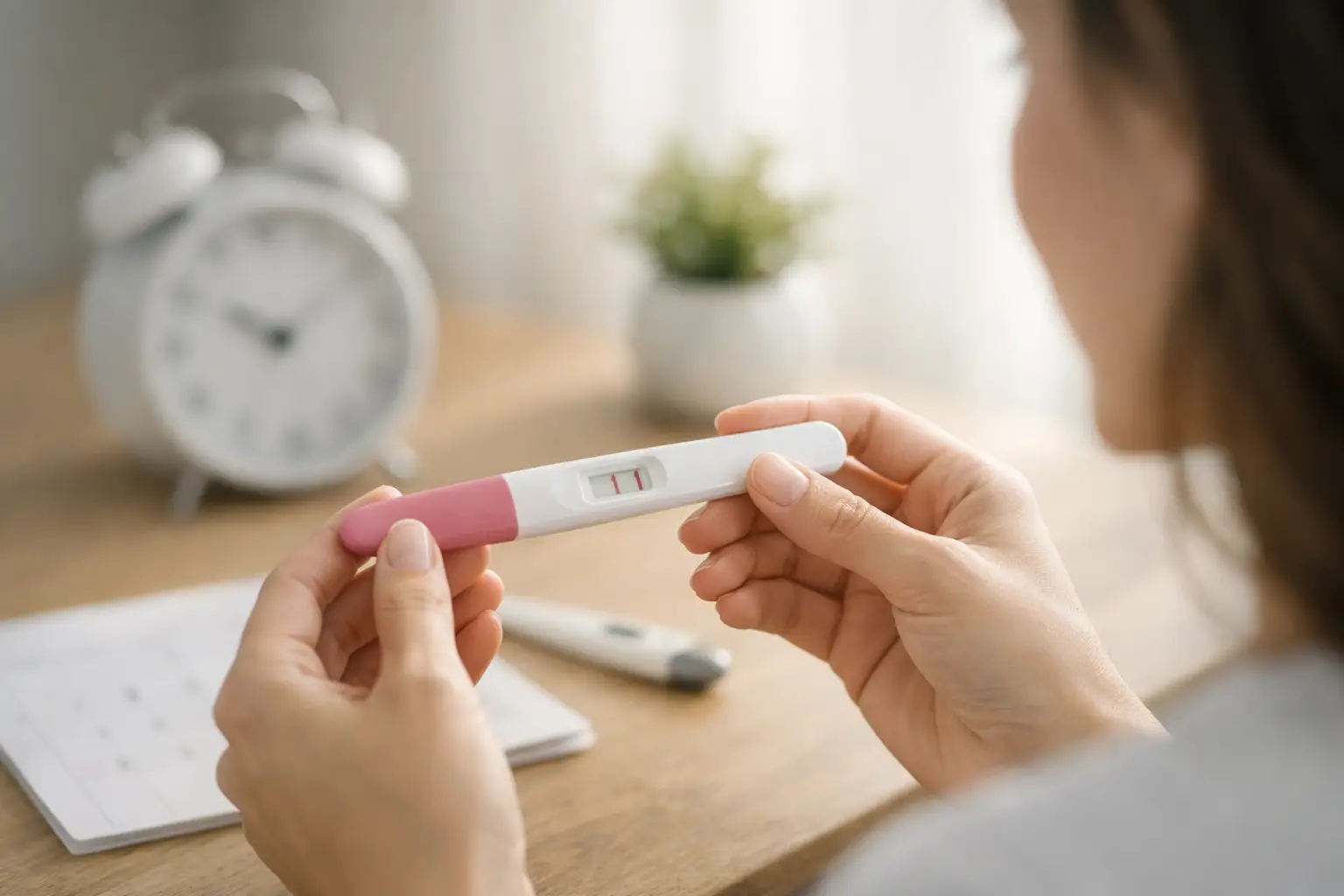
A test can feel like a demand for certainty at a moment when your body is giving very little away. Knowing when to take a pregnancy test can reduce avoidable uncertainty, but it cannot make the waiting easy. You are not being dramatic for wanting to test, nor are you failing at this if you test earlier than planned. The useful question is whether a result is likely to be reliable enough to act on.
When to take a pregnancy test
Most home pregnancy tests are most reliable from the first day of a missed period. They detect human chorionic gonadotrophin, or hCG, a hormone produced after a fertilised egg has implanted in the uterus. Before implantation, there may not be enough hCG in urine for a test to detect.
If you know when your period was due, wait until that day or later. Testing before then can produce a negative result even if you are pregnant. This is not because you have done anything wrong or read your body badly. It is simply a limit of timing and hormone levels.
NHS guidance says that most pregnancy tests can be used from the first day of a missed period. Some tests claim they can detect pregnancy earlier, but an early result is less dependable. If you test early and it is negative, repeat the test on the day your period is due, or a few days later if it has still not arrived. If your period is generally unpredictable rather than absent this once, our guide to why a period runs late covers the wider set of reasons beyond pregnancy.
If your periods are irregular or you do not know when one was due
A calendar date is less useful when cycles vary, you have recently stopped hormonal contraception, you are breastfeeding, or you have had bleeding that is difficult to interpret. In these situations, take a test at least 21 days after the last time you had sex without contraception, or after contraception may have failed. This is the practical timing recommended by the NHS when the expected period date is unclear.
If there has been sex on more than one date, a negative result may only be reliable for the encounter that happened at least 21 days ago. A later encounter may still be too recent to show on a urine test. Write down the dates if you can. A dated record is not fussing. It gives you and your clinician clearer information if you need further advice.
How to make a home test more reliable
Follow the instructions for the specific test, including the timing window for reading the result. A line that appears outside that window should not be treated as a clear positive result. Check the expiry date too.
You can test at any time of day after a missed period, but first urine of the morning may be more concentrated, particularly if you are testing early. Avoid drinking large amounts of fluid just before testing, as this can dilute urine. These small details matter most when hCG levels may still be low.
A positive result is usually reliable if the test has been used correctly. A negative result is less conclusive when it is taken early, when ovulation may have happened later than expected, or when dates are uncertain. If the test is negative but your period has not arrived, take another test after a few days. If you continue to get negative results and your period remains absent, speak with a GP or sexual health service.
Do not feel obliged to keep testing repeatedly through a single day. More tests do not create more certainty once the hormone level has not had time to change. The attention that tends to pay nothing back is testing very early, searching every possible symptom, and comparing your cycle with strangers' accounts online. A simple floor is enough: note the first day of your last period, the date or dates of sex where pregnancy was possible, and the date and result of each test. Record more if it helps you communicate with your care team, not because you must monitor every sensation.
When a positive test is followed by a period
There is a reason to be gentle with yourself about testing early, beyond the risk of a false negative. Very sensitive home tests can now detect a pregnancy so soon after implantation that some are lost naturally within days, before they would ever have been noticed by earlier generations of women, or by anyone who does not test this early. This is sometimes called a chemical pregnancy: a positive test followed, often within about a week or two, by bleeding that behaves much like a period, sometimes heavier or more crampy than usual.
It is more common than most people realise, and it is not something you caused, by testing, by anything you did, or by anything you failed to do. If it happens, it can still be a loss worth acknowledging, whether you feel that keenly or feel relatively little, and both responses are ordinary. If it happens more than once, or you would simply like to talk it through, that is a reasonable thing to raise with a GP or your fertility clinician, and support organisations exist specifically for early pregnancy loss if you want somewhere to turn.
What symptoms can and cannot tell you
Breast tenderness, nausea, tiredness, bloating, light bleeding and cramps can happen in early pregnancy. They can also happen before a period, during a cycle affected by stress or illness, or for many other reasons. Symptoms may be meaningful to you, but they cannot confirm pregnancy on their own.
Light bleeding does not automatically mean you are not pregnant. Equally, a positive pregnancy test does not explain the cause of pain or bleeding. This distinction matters because pregnancy testing is one piece of information, not a verdict on what is happening in your body.
If you record symptoms, make them specific where possible: when bleeding began, how heavy it is, where pain is felt, whether it is one-sided, and whether it is changing. Feminal allows patients to record cycle information and symptoms for their linked clinician to see between appointments. The record exists to carry what you have noticed into the room with you, not to keep watch over yourself, and a missed day of recording does not make your account less valid.
Testing after fertility treatment or a trigger injection
If you are having IVF or another fertility treatment, use the timing set by your care team rather than a general online rule. hCG used in a trigger injection can remain in the body long enough to make a home test positive even when it is too early to know whether treatment has resulted in pregnancy.
Your clinic may arrange a blood test or ask you to take a urine test on a particular date. Waiting for that date can be difficult, especially when you are noticing symptoms or spotting, but it protects you from trying to interpret a result that may be misleading. The HFEA advises following your fertility clinic's instructions after treatment, as protocols and test timing differ.
If you have a positive test after treatment, do not stop prescribed medicines unless your care team tells you to. Contact the clinic according to the instructions you have been given.
What to do with a positive result
If the result is positive, contact a GP, midwife, sexual health service or your fertility clinic to discuss next steps. You do not need to have every decision made before making that call. If you take regular medication, have a long-term health condition, or are unsure whether a medicine or supplement is suitable in pregnancy, ask a pharmacist, GP or relevant clinician for individual advice. Do not stop prescribed medication suddenly without speaking to them.
If you think you may be pregnant and do not want to continue the pregnancy, timely, confidential advice from an appropriate healthcare service can help you understand your options. You deserve clear information without judgement.
When pain or bleeding needs urgent care
Seek urgent medical care if you might be pregnant and have severe abdominal pain, pain low on one side, shoulder-tip pain, heavy vaginal bleeding, dizziness, fainting, or feel very unwell. These symptoms can have different causes, including ectopic pregnancy, and need prompt assessment. NICE guidance is clear that pain and bleeding in early pregnancy should be assessed according to the symptoms and clinical situation, not dismissed because a test is negative, faint or uncertain.
Also seek prompt advice if you have a positive test with bleeding or pain, even if the symptoms seem manageable. Early assessment cannot be replaced by comparing line darkness, tracking an app prediction, or waiting for a symptom to become unmistakable.
The right time to test is usually the first day your period is late, or 21 days after sex where pregnancy was possible if your dates are unclear. Beyond that, let the result guide the next sensible step, and let concerning symptoms guide you to care. Paying attention to your body is not an inconvenience to other people. It is useful information, and you are allowed to bring it forward.
Sources used
NHS guidance on pregnancy tests and early pregnancy. NICE guidance on the assessment of pain and bleeding in early pregnancy. HFEA patient information on fertility treatment. Tommy's and the Miscarriage Association guidance on chemical pregnancy.