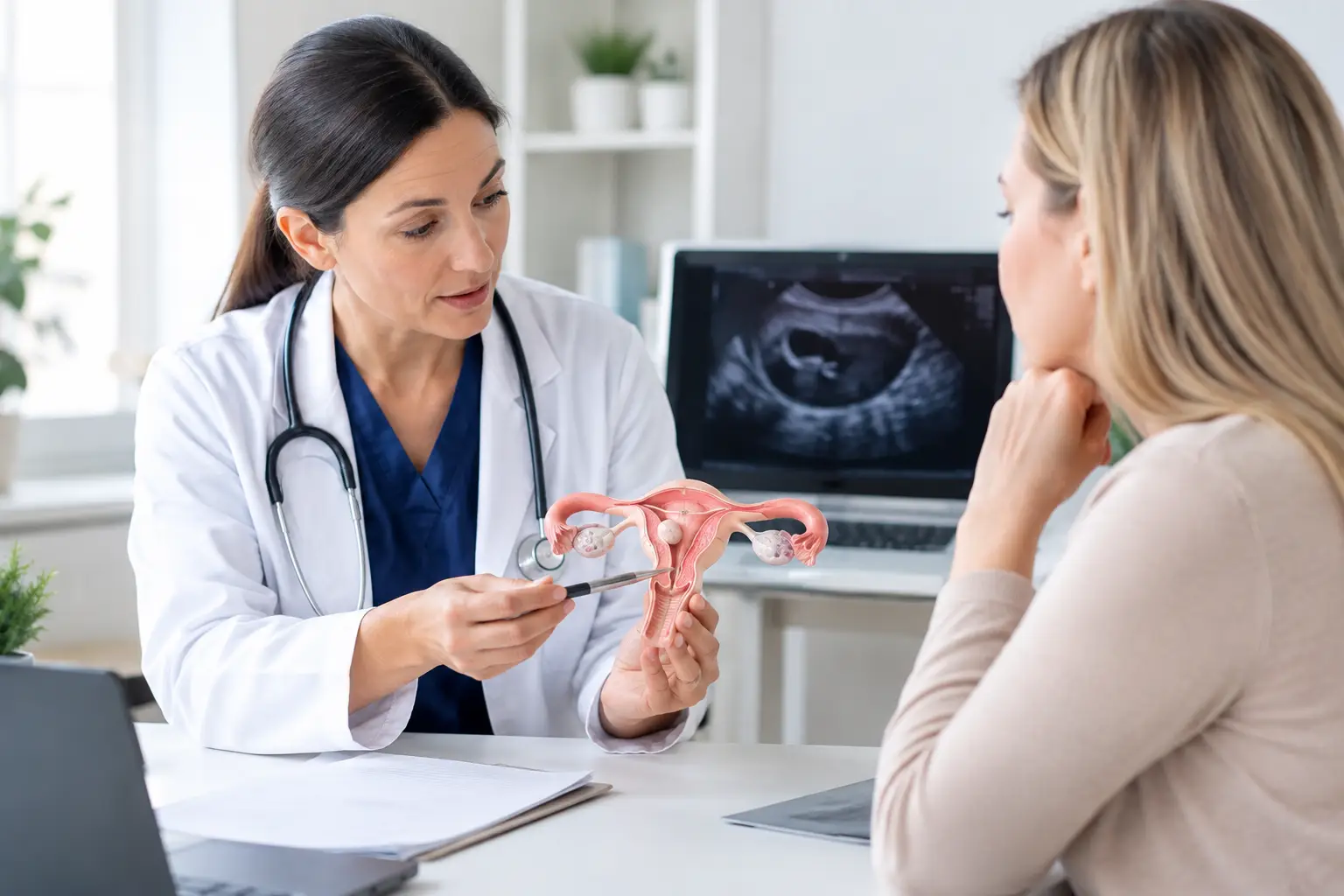
A fibroid found on a scan can make every future plan feel suddenly conditional. You may be wondering whether it explains delayed conception, whether IVF will work, or whether you have missed a window to act. The short answer to "can fibroids affect fertility outcomes" is yes, sometimes. But the more useful answer is that the effect depends far more on where a fibroid sits and how it changes the shape of the womb than on the fact that it exists.
Fibroids are common, non-cancerous growths of muscle and fibrous tissue in or around the womb. Many people with fibroids conceive without fertility treatment and have healthy pregnancies. Others may need a more detailed conversation with a gynaecologist or fertility specialist. Neither response is a measure of how seriously you have taken your health.
It is also worth knowing that fibroids are not evenly distributed. The evidence consistently shows they occur more often, often at a younger age, and frequently with a heavier symptom burden in Black women than in white women, for reasons that remain an active area of research, alongside the well-documented pattern of Black women's gynaecological symptoms being investigated less thoroughly and taken less seriously in general. Neither of those facts says anything about you individually. They are reasons to be persistent about getting a precise answer, not vague reassurance, if a fibroid is found.
Can fibroids affect fertility outcomes?
A fibroid may affect fertility when it interferes with the uterine cavity, fallopian tubes, implantation, or the ability to carry a pregnancy comfortably. It may also have no meaningful effect at all. Size matters in some situations, but location and distortion of the womb cavity are usually more informative.
Clinicians generally describe fibroids by where they grow:
- Submucosal fibroids grow into the cavity of the womb. They are most consistently associated with reduced fertility and a higher risk of miscarriage because they can alter the surface where an embryo implants.
- Intramural fibroids grow within the muscular wall of the womb. Their effect is less clear, particularly when they do not distort the cavity. Larger fibroids or those close to the cavity may be more relevant.
- Subserosal fibroids grow on the outer surface of the womb. These are less likely to affect fertility directly, unless they are very large or press on nearby structures.
NICE guidance on heavy menstrual bleeding and fibroids recognises that treatment decisions should take account of fibroid size, number, location, symptoms and a person's plans for pregnancy. That is why a scan report that simply says "fibroids present" rarely gives enough information to answer a fertility question on its own.
Why the exact position matters
Conception involves several separate steps: ovulation, sperm reaching the egg, fertilisation, embryo development, implantation and early pregnancy. A fibroid does not need to affect all of them to matter, and it does not necessarily affect any of them.
A submucosal fibroid can change the contour of the uterine cavity, potentially making implantation less likely. A large fibroid in a particular position may press on a fallopian tube, although this is not the usual explanation for infertility. Fibroids can also be linked with heavy bleeding, pelvic pressure and pain, which may be physically draining and can make sex difficult or uncomfortable.
For IVF, the central question is often whether a fibroid distorts the cavity of the womb. The Human Fertilisation and Embryology Authority notes that fertility clinics assess individual factors that may affect treatment, rather than relying on one finding in isolation. Your age, ovarian reserve, sperm factors, embryo factors, previous pregnancy history and the reason for fertility treatment still matter.
This uncertainty can be frustrating. It is not a clinician being evasive when they say "it depends", provided they then explain what information would make the answer clearer.
What tests may clarify the picture
A pelvic ultrasound is often the first test used to identify fibroids, estimate their size and describe their position. If the relationship to the womb cavity is uncertain, a clinician may suggest further imaging, such as a saline infusion scan, hysteroscopy or MRI. The right test depends on what has already been seen, your symptoms and whether you are trying to conceive naturally or preparing for fertility treatment.
A hysteroscopy allows a clinician to look inside the womb with a thin telescope. It can be particularly useful when a submucosal fibroid is suspected. It is not automatically necessary for everyone with fibroids.
If you have been told that a fibroid is "small", it is reasonable to ask a more precise question: does it distort the uterine cavity? You can also ask whether its position is likely to change the plan for trying to conceive, IVF or pregnancy monitoring. These are practical questions, not fussing.
Does fibroid removal improve fertility?
Removal is not a default answer. Surgery to remove fibroids is called myomectomy, and it may be considered when fibroids distort the womb cavity, are thought likely to interfere with fertility treatment, or cause significant symptoms. For some people, removing a submucosal fibroid can improve the conditions for implantation.
The trade-offs deserve a proper discussion. Surgery carries risks including bleeding, infection, scarring and, in some cases, effects on future pregnancy or delivery planning. Recovery takes time. Intramural fibroids that do not distort the cavity sit in a more uncertain area: surgery may help in selected circumstances, but it does not guarantee pregnancy and may not be recommended before IVF.
NICE advises that decisions about fibroid treatment should be individualised. A fertility specialist and gynaecologist can help weigh the possible benefit against the delay, risks and your broader fertility picture. If a recommendation does not make sense to you, ask what evidence applies to your specific fibroid rather than to fibroids in general.
A record that makes the appointment more useful
Fibroids are not assessed by scan findings alone. Bleeding pattern, pain, pressure symptoms, anaemia, medication use, previous pregnancies and treatment timelines can all help shape the conversation. A simple record is often enough: note the first day of bleeding, how long it lasts, whether you pass clots, pain severity, pelvic pressure, pain during sex and any days when symptoms stop you doing ordinary activities.
You do not need to turn your life into a project to be credible. The floor is dates and a few concrete details. If you prefer a fuller record, that is valid too. What tends not to help is repeatedly searching for certainty in other people's scan measurements, comparing IVF cycles online or testing early to manage anxiety. Those habits can consume attention without giving your care team better clinical information.
Feminal can hold records of cycles, symptoms, medications and vitals so that what you choose to record is available to your linked clinician between appointments. The record exists to be handed over, not kept as proof you have earned your seat in the room. Missing a day does not erase what you have noticed.
Questions worth taking to your clinician
At a fertility or gynaecology appointment, it may help to ask: What type of fibroid do I have, and does it change the shape of my womb cavity? Could it explain any of my symptoms or fertility history? Do you recommend monitoring, more imaging or treatment before trying to conceive or starting IVF? If treatment is suggested, what are the likely benefits, risks and time implications in my case?
If you have very heavy bleeding, fainting, severe sudden pelvic pain, fever, or think you may be pregnant and have pain or bleeding, seek urgent medical care. These symptoms need assessment regardless of whether fibroids are already known.
A fibroid is a finding, not a verdict on your fertility. The most useful next step is not to carry the uncertainty alone, but to get the details of its position, your symptoms and your plans into the same conversation.
Sources used
NICE guidance on heavy menstrual bleeding and fibroids. HFEA information for fertility patients. RCOG patient information on fibroids and reproductive health disparities.