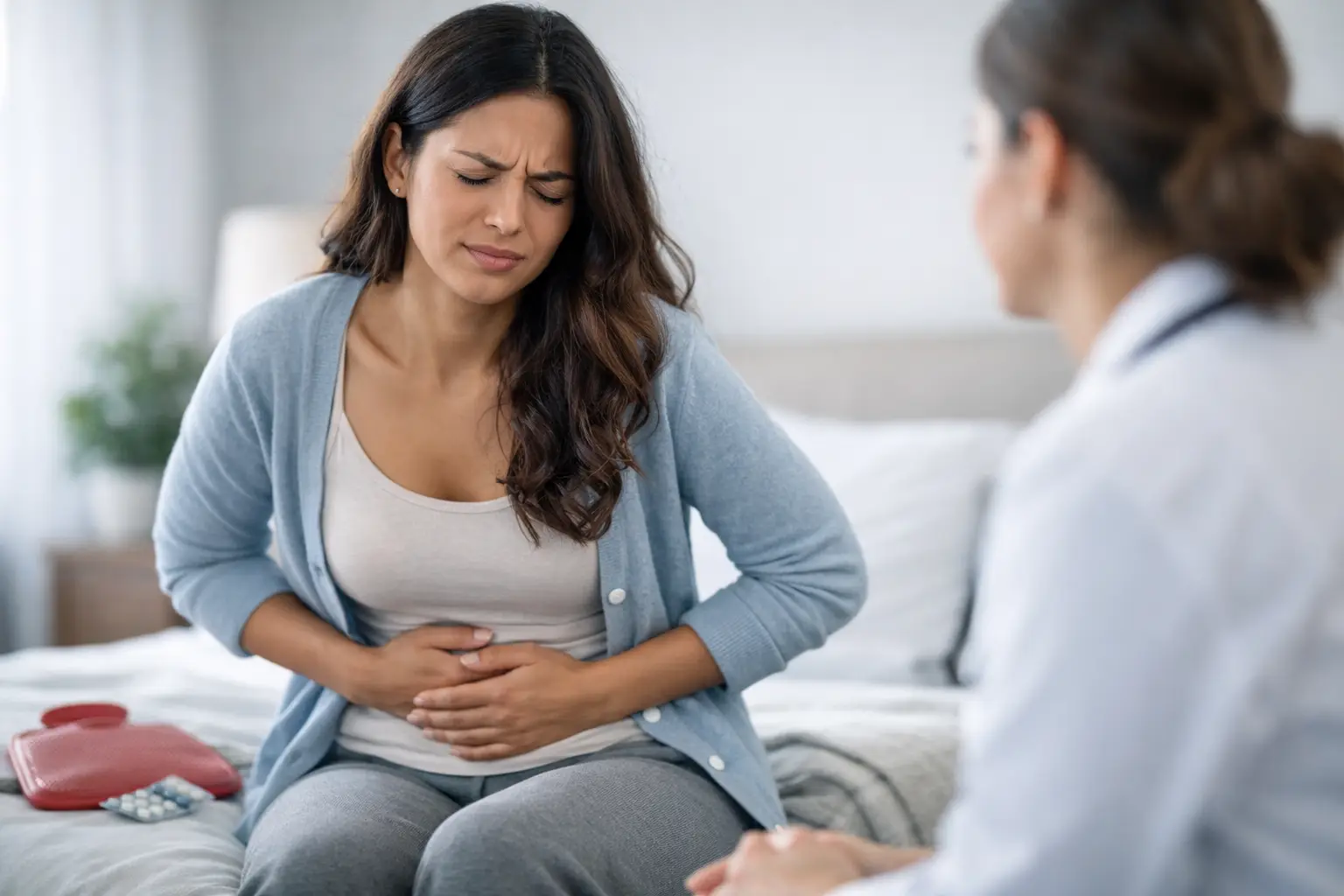
A period can make the lower abdomen ache, cramp or feel heavy enough to interrupt a normal day. But asking “period pain normal or not” is not fussing. It is a sensible question, particularly if pain is changing your plans, your sleep, your work or your sense of what your body can tolerate.
Some period pain is common. Pain that is severe, new, worsening or accompanied by other symptoms deserves proper attention. The line is not whether you can force yourself through it. The useful question is whether the pattern is expected for you, and whether it is asking for a clinical review.
Is period pain normal or not?
Period pain, also called dysmenorrhoea, happens when the uterus contracts to shed its lining. Chemicals called prostaglandins help drive those contractions. Higher prostaglandin activity can mean stronger contractions and more pain.
For many people, cramps begin just before or at the start of bleeding, are worst over the first day or two, then ease. The pain may spread to the lower back or thighs and can come with tiredness, nausea, loose stools or headache. NHS guidance describes this as common period pain, particularly in the years after periods begin.
Common does not mean trivial. If you need rest, warmth or pain relief for a day, that may be an understandable response to your cycle. You do not have to minimise it to prove that you are coping well.
However, severe pain should not simply be filed under “having bad periods”. Pain can sometimes be associated with conditions such as endometriosis, adenomyosis, fibroids, pelvic inflammatory disease or ovarian cysts. This is not a way to self-diagnose from a list. Many symptoms overlap, and only a clinician can assess your individual situation. It is a reason to take a persistent pattern seriously.
The signs that make a review worthwhile
Arrange an appointment with a GP, gynaecologist or other appropriate clinician if period pain is affecting your daily life, is not improving with measures that usually help, or has become noticeably worse. NHS guidance advises seeking medical advice for severe period pain or pain that stops you doing your usual activities.
A review is particularly worth considering when cramps occur alongside very heavy bleeding, bleeding between periods, pain during or after sex, pain when opening your bowels or passing urine, difficulty becoming pregnant, or a marked change in cycle length or bleeding pattern. Pain that begins for the first time later in adulthood can also need assessment, rather than being assumed to be the same as the cramps you had as a teenager.
It can help to say plainly what the pain prevents you from doing. “Bad cramps” is true, but “I missed two days of work this month”, “I wake at night with pain”, or “I cannot stand upright for the first few hours of bleeding” gives a clinician a clearer picture of impact. Pain is not measured only by a number out of ten. Its effect on your life is clinically relevant information.
Seek urgent medical care if pelvic or abdominal pain is sudden and severe, especially if you might be pregnant, have heavy bleeding, feel faint, have a fever, are being sick repeatedly, or feel very unwell. Severe one-sided pain, shoulder-tip pain, dizziness or collapse in early pregnancy can be signs of an ectopic pregnancy and need immediate assessment. Do not wait for a routine appointment in these circumstances.
Why patterns matter more than a single difficult month
Bodies are not clockwork. Stress, illness, travel, sleep disruption, stopping or starting hormonal contraception, and life stage can all affect a cycle. One unusually painful period does not automatically point to a serious cause.
What often clarifies the conversation is the pattern over two or three cycles. Does pain start before bleeding or only once it begins? Is it getting worse? Is it concentrated on one side? Does it continue after the period ends? Has bleeding become heavier, longer or more irregular? These details can help a clinician decide what questions, examination or tests may be appropriate.
NICE guidance on endometriosis specifically recognises that cyclical pelvic pain, painful periods affecting daily activities, pain during or after sex, and certain bowel or bladder symptoms can warrant consideration in assessment. That does not mean every painful period is endometriosis. It means these symptoms are worth reporting rather than quietly accommodating.
Keep a record that supports care, not surveillance
You do not need to document every sensation to be a credible patient. A useful floor is to note the first day of bleeding, the days pain occurs, how it affects normal activity, and anything that is clearly unusual for you. If you have capacity for more detail, add it. If you miss a day, the record is still useful.
For two or three cycles, a dated note can include:
- when pain begins, peaks and eases, including whether it occurs outside bleeding days
- where the pain is felt and whether it spreads to the back, legs, bowel or bladder area
- bleeding changes, such as flooding, clots, leakage, or needing to change period products much more often than usual
- associated symptoms and practical impact, including nausea, fatigue, sleep disruption, missed work, school or social plans
If you use medication for pain, note what you took, when, and whether it made a meaningful difference. Bring the record to your appointment. It is not evidence that you have become preoccupied with your body. It is communication that reduces the pressure to remember everything correctly while sitting in a consulting room.
Feminal can hold cycle, symptom and medication records in one place for you and your linked clinician to view, live between appointments. The point is not to monitor yourself perfectly. It is to make the pattern easier to describe when you need care.
There is a limit to attention that pays back. Repeatedly searching symptoms at 2 am, comparing your bleeding with strangers online, or trying to predict a diagnosis from one cycle can increase anxiety without making the next clinical conversation clearer. Aim your attention at dates, changes and impact. Leave the interpretation to a qualified clinician who can consider your full history.
What may happen at an appointment
A clinician may ask about your periods, contraception, sexual health, pregnancies, medicines, family history and any bowel or bladder symptoms. Depending on your age, symptoms and circumstances, they may suggest an examination, blood tests, a pregnancy test, screening for infection, or imaging such as an ultrasound scan. Not everyone needs every test, and a normal scan does not explain every type of pelvic pain.
You can ask what the clinician is considering, what they are looking for, and what should prompt you to return. If symptoms continue despite an initial plan, it is reasonable to go back. RCOG information on endometriosis notes that reaching an explanation for pelvic pain can take time because symptoms vary and several conditions may look similar at first.
If you feel dismissed, restate the change you are experiencing and its impact. You might say: “This is different from my usual period pain,” or “I am unable to carry on with normal activities for two days each cycle.” You are not asking for special treatment by being specific. You are giving the information needed for a better assessment.
Painful periods are common, but enduring escalating or life-limiting pain without asking questions should never be presented as a woman’s ordinary duty. Notice the pattern, record what you can, and let that record support a conversation in which your body is taken seriously.