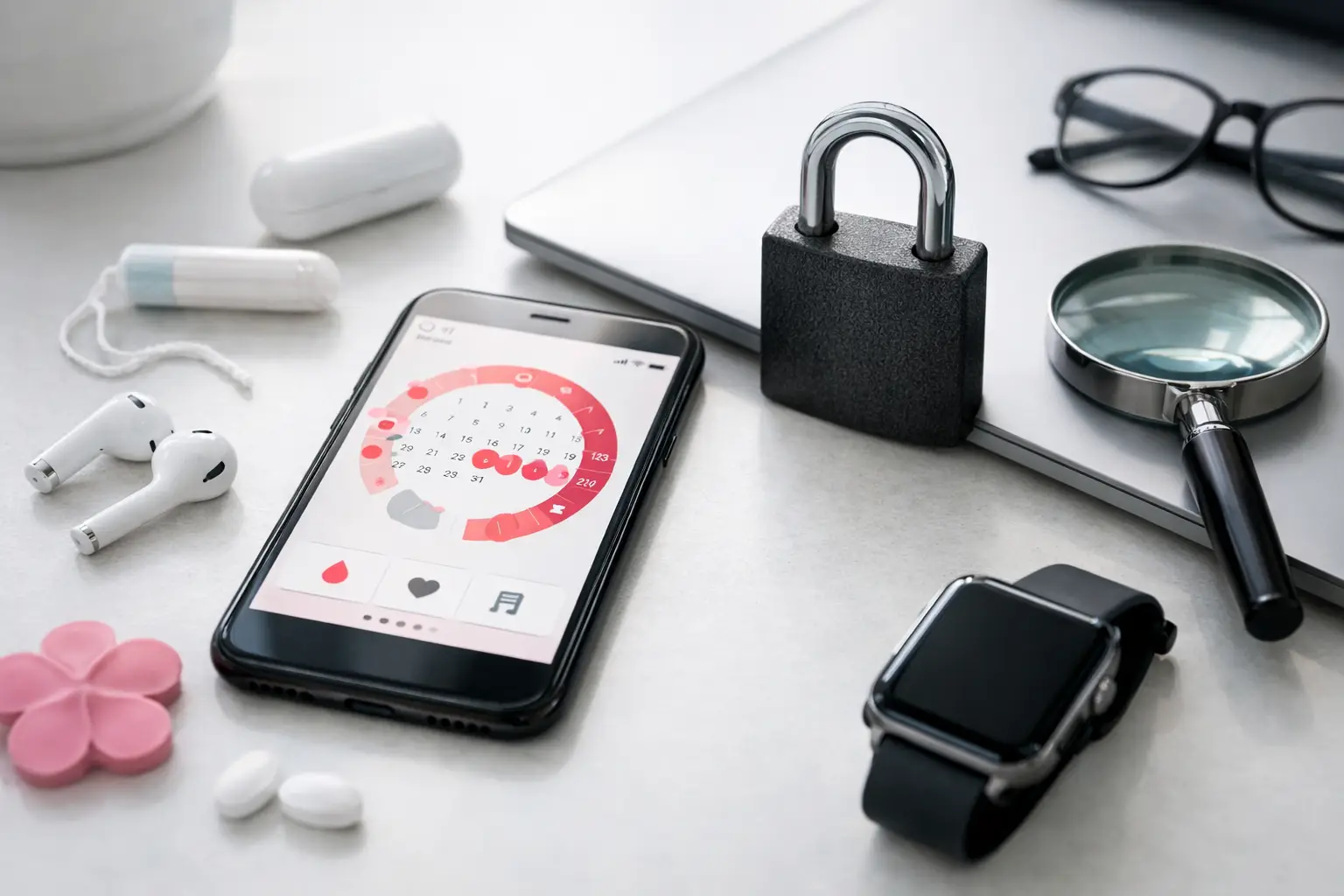
A period date can look ordinary on a screen. In context, it may reveal that you are trying to conceive, using contraception, experiencing pain, noticing a missed period, or preparing for fertility treatment. That is why a menstrual-tracking app's privacy review should begin with a simple fact: this is not trivial data, and paying attention to your body is not something to apologise for.
A useful app can turn scattered recollection into a dated record. The NHS advises keeping a symptom diary when periods are affecting daily life, because details such as timing, bleeding and pain can help make a clinical conversation more specific. But a record that helps you speak clearly to a clinician should not require you to surrender control of intimate information to advertisers, analytics companies or unclear commercial partners.
Why menstrual data needs a higher privacy standard
Menstrual data is health information, even where an app calls itself a lifestyle or wellbeing product. A cycle pattern can be combined with symptom entries, sexual activity, medication information, location data or device identifiers to create a detailed picture of a person's life. The concern is not that every app will misuse it. The concern is that the consequences of poor design, vague policy wording or a future change in ownership can be unusually personal.
In the UK, information about health is given additional protection under data protection law. South African readers should also expect a clear lawful basis for collection, a stated purpose and safeguards for personal information under POPIA, which treats health information as a special category requiring extra justification to process. Legal compliance matters, but it is not the whole test. A privacy policy can meet a minimum legal threshold while still leaving a reader unable to tell what happens to her data in practice.
The practical question is not, "Should I track?" It is, "What am I recording, who is it for, and what control do I retain?" A record built for your care team is a different object entirely from one built to be sold.
Menstrual-tracking app privacy review: what to check
Privacy policies are often long because they cover many possible uses. You do not need to become a lawyer to make a good decision. Look first for direct answers to a few questions. (If you want the fuller picture on securing your accounts and devices generally, that is a separate, broader guide; this one is about choosing the app in the first place.)
What information does the app collect beyond your entries, and who is it really for?
An app may collect the cycle and symptom information you type in, but also account details, device identifiers, IP address, usage patterns and data from cookies or software development kits. Some of this can support security and app performance. The distinction to look for is whether the company collects only what it needs to provide the service, or builds a broader profile for advertising, marketing or analytics. It is reasonable to ask what pays for the product: if advertising or data-driven marketing sits at the centre of the business model, intimate entries may be more likely to sit alongside tracking technologies designed to measure behaviour, rather than to serve you.
Be cautious with language such as "partners", "service providers", "affiliates" and "research" when it is not explained. A credible policy names categories of recipient, describes why sharing happens and distinguishes information used to run the app from information used for advertising. If an app says data is "de-identified", check whether it explains the process and whether data may still be linked back to an account or device.
Can you delete your data properly, and where does it actually go when shared?
Deleting an app from your phone is not the same as deleting an account. A good service explains how to delete an account, what happens to the associated health data, how long backups are retained and whether deletion requests have exceptions required by law. Export matters too: your record may be valuable when you change services or want to discuss patterns at an appointment, so check whether you can get it out in a readable form rather than starting again from nothing.
The sharper question, and the one worth asking before any other, is what actually happens when you share information with a clinician. Is your clinician viewing your record through an authenticated clinical system, built for that purpose, or are you exporting screenshots and emailing them yourself, the way most trackers quietly require? The first keeps your record inside something accountable. The second means your intimate health information is now sitting in whatever inbox you sent it to, outside any system designed to protect it. That distinction rarely appears in marketing copy, but it is one of the most consequential things you can ask.
A simple floor, then permission to record more
You do not need to record every sensation for tracking to be worthwhile. For many people, a simple floor is enough: the first day of bleeding, usual cycle length, changes in flow, significant pain and symptoms that disrupt work, sleep or daily life. The NHS recommends seeking medical advice if periods become painful, heavy, irregular or different from what is usual for you.
If you are preparing for a gynaecology appointment, investigating fertility concerns or following an IVF protocol set by your care team, more detail may be useful. Dates, symptoms, medications, supplements and relevant vitals can make it easier to describe what happened and when. NICE guidance on heavy menstrual bleeding and fertility assessment relies on a careful history because pattern and timing matter. Detailed tracking is not fussing. It is a record of your experience.
There is also attention that pays very little back. Repeated symptom searching, comparing your cycle with strangers online, or testing earlier than advised can heighten anxiety without making the record clearer. Missed a day? Add what you remember when you can, or leave it blank. A partial record is still information, not a failed assignment.
Questions worth asking before you press download
Before choosing an app, read its privacy notice and ask whether its answers are specific enough for the information you plan to enter. Does it say whether data is sold or used for targeted advertising? Does it state where data is stored and which country's law applies? Can you use the app without entering information that is not necessary? Can you export and delete your account without contacting support repeatedly?
Also check whether the privacy promise can be found outside the marketing page. Look for a version date, a clear contact route for privacy questions and a description of how the company notifies users if terms change. If the policy feels deliberately difficult to understand, that is useful information in itself.
Applied honestly to Feminal: no advertising, and data is never sold. Your conversations with Alina, the in-app companion, are not used to train AI models. Your health record is encrypted at rest, and a linked clinician sees it through an authenticated clinical portal built for that purpose, the difference named above, rather than screenshots passed hand to hand. The platform describes, observes and educates. It does not diagnose or replace clinical care.
Privacy should support, not punish, body literacy
Some people avoid tracking because they fear becoming preoccupied. Others record very little because years of dismissal have taught them that details will not be believed. Neither response makes you careless or difficult. The appropriate amount of attention depends on what you need from the record.
Where symptoms are severe, sudden, or accompanied by very heavy bleeding, fainting, chest pain, difficulty breathing or possible pregnancy complications, seek immediate medical care rather than relying on an app. RCOG and NHS resources can help explain common menstrual and reproductive health concerns, but personal care decisions belong with a qualified clinician who knows your circumstances.
Choose the record that lets you notice what is happening without turning your private life into someone else's product. Your dates, symptoms and questions are not embarrassing excess detail. They are yours, and they deserve to be handled accordingly.
Sources used
This article reflects public guidance from the NHS on symptom diaries and heavy menstrual bleeding, NICE guidance on fertility assessment, UK data protection law on special category health data, and South Africa's Protection of Personal Information Act (POPIA) on the processing of health information.