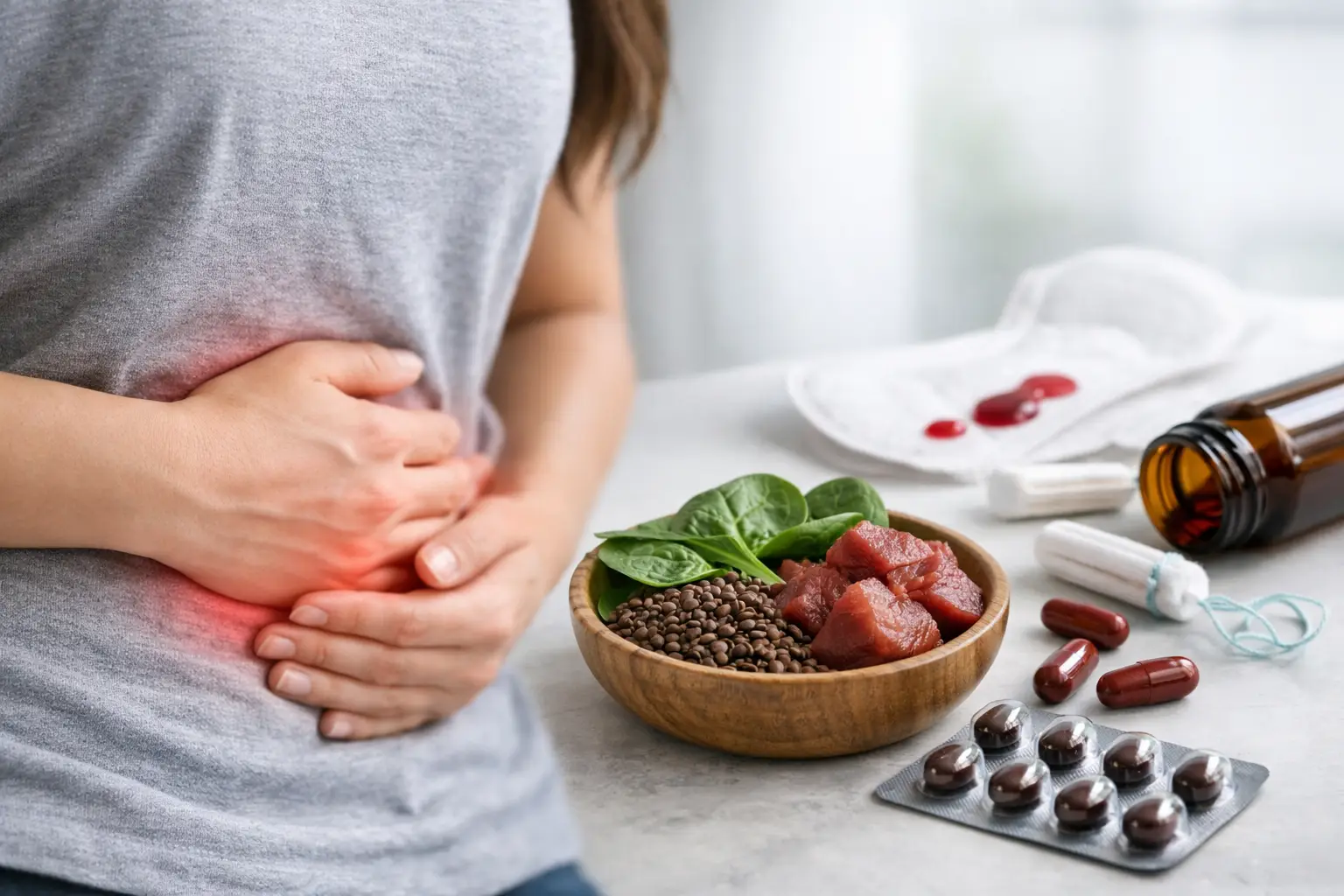
A period can be heavy enough to change how you move through the day, yet familiar enough that you wonder whether you are allowed to mention it. Iron deficiency and heavy periods are closely connected: regular blood loss can deplete iron stores, while low iron can leave you exhausted, breathless or less able to cope with a period that already feels demanding. Noticing that pattern is not fussing. It is useful clinical information.
How iron deficiency and heavy periods connect
Iron is needed to make haemoglobin, the protein in red blood cells that carries oxygen around the body. When menstrual blood loss is high or prolonged, the body may lose iron faster than it can replace it through food. Over time, iron stores can fall. Iron deficiency can occur before anaemia develops, and iron-deficiency anaemia means there are too few healthy red blood cells to carry oxygen effectively.
Heavy menstrual bleeding is common, but common does not mean something you must simply endure. NICE describes it as excessive menstrual blood loss that affects a person's physical, social, emotional or material quality of life. That definition matters because measuring every millilitre is neither realistic nor required. If bleeding regularly dictates your clothing, sleep, work, travel, exercise or plans, it is worth discussing.
Some people with low iron have obvious symptoms. Others adapt gradually and only recognise the change when they look back. Tiredness that is out of proportion to your usual routine, shortness of breath on exertion, headaches, dizziness, palpitations, reduced concentration and looking paler than usual can all be associated with iron-deficiency anaemia. These symptoms also have other possible causes, which is why they are a reason for assessment rather than proof of a particular condition.
What counts as a heavy period?
A single dramatic day does not necessarily tell the whole story. The more useful question is what happens across your cycle and whether it is changing. You may be having heavy bleeding if you need to change pads, tampons or a menstrual cup very frequently, use more than one form of protection, pass clots, bleed through clothes or bedding, or bleed for more than seven days. Needing to plan your life around access to a toilet or spare products counts too.
The NHS also advises speaking to a GP if periods have become heavier, are affecting daily life, or occur alongside bleeding between periods or after sex. A new pattern deserves attention even if you have always considered yourself someone with "bad periods".
Heavy bleeding has many possible explanations. Fibroids, adenomyosis, endometriosis, polyps, hormonal changes, some medicines, bleeding disorders and pregnancy-related causes may all be relevant in particular circumstances. Sometimes no structural cause is found. A symptom record cannot determine the cause, but it can give your clinician a clearer starting point for a Differential Assessment.
The record that is worth keeping
You do not need a perfect spreadsheet or a forensic account of every bathroom visit. A useful minimum is to note the first and last day of bleeding, the days that are heaviest, the period products and changes that feel unusual for you, and any symptoms such as clots, pain, flooding, dizziness or fatigue. Record whether symptoms stop you working, studying, sleeping or leaving home.
If you can, add dates. "I have been tired for ages" is real, but "for three cycles, I have had two days of flooding and have needed to lie down after climbing stairs" gives a clinician something more actionable. Thorough records are welcome if they help you; missing a day does not make the rest of the record worthless.
Feminal can bring cycle, symptom, medication, supplement and vital records together for you and your linked clinician to view live. The record exists to carry the pattern into the room with you, not to keep watch over you between visits. Keep the information that changes the conversation, then leave the rest alone.
There is also attention that tends not to pay you back: repeatedly searching every symptom late at night, comparing your flow with strangers online, or trying to judge iron status from fatigue alone. A dated record plus a clinical conversation is usually more useful than either guesswork or relentless monitoring.
What a clinician may consider
A GP or gynaecology clinician will usually ask about your bleeding pattern, pain, contraception, pregnancy possibility, medical history and medicines. They may arrange a full blood count to look for anaemia. Depending on your symptoms and history, they may also consider tests for iron stores, often including ferritin, and investigate the cause of heavy bleeding. NICE recommends a full blood count for all women with heavy menstrual bleeding, alongside assessment tailored to the person's symptoms and circumstances.
It is reasonable to ask what each test is looking for and what the result means in your case. If you have been told your blood count is normal but still feel unwell, explain the impact clearly and ask whether further assessment is appropriate. A normal result can be reassuring, but it should sit alongside your history rather than replace it.
Care for heavy periods depends on the likely cause, whether you want contraception, your fertility plans, other health conditions and your own preferences. Options can include medicines to reduce bleeding, hormonal contraception, a hormonal intrauterine system, and procedures or surgery in selected situations. Iron replacement may also be discussed when iron deficiency is confirmed or strongly suspected. It is worth waiting for that confirmation rather than starting a supplement on your own guess: taking iron without knowing whether you actually need it can cause its own problems, including constipation and stomach upset, and makes it harder to tell whether fatigue has a different cause entirely. If you do start one, a pharmacist can check it against your other medicines and conditions. These choices have trade-offs, so they need an individual conversation with your clinician rather than a one-size-fits-all recommendation.
Food matters, but it is not a moral test. Iron-rich foods can support overall intake, including meat, fish, pulses, lentils, beans, leafy greens and fortified cereals. Plant sources are absorbed differently from animal sources, and having vitamin C-containing food or drink alongside them may help absorption. If you eat little or no meat, this is worth mentioning to your clinician specifically, since it can affect both your risk and what approach makes sense for you. However, dietary changes alone may not restore stores quickly when menstrual blood loss remains high. Do not assume you have failed at eating well if your clinician recommends treatment or testing.
When to seek urgent help
Seek immediate medical care if you are soaking through pads or tampons every hour for several hours, feel faint or collapse, have severe weakness, chest pain, trouble breathing, or might be pregnant and have heavy bleeding or significant pain. Urgent assessment is also appropriate for sudden severe pelvic pain, particularly with bleeding. Trust the severity of what is happening, not whether you think you can explain it neatly.
For non-urgent but persistent concerns, book an appointment rather than waiting until you are completely depleted. Bring your record, say what the bleeding prevents you from doing, and ask directly whether iron deficiency or anaemia should be considered. The RCOG and NHS both emphasise that heavy menstrual bleeding warrants assessment when it affects quality of life.
Your period is not a monthly exam in resilience. If blood loss is making your world smaller, that is enough reason to take it seriously, record what you can, and ask for care that takes you seriously too.
Sources used
NICE guideline NG88 on heavy menstrual bleeding. NHS guidance on heavy periods and iron-deficiency anaemia. RCOG patient information on heavy menstrual bleeding.