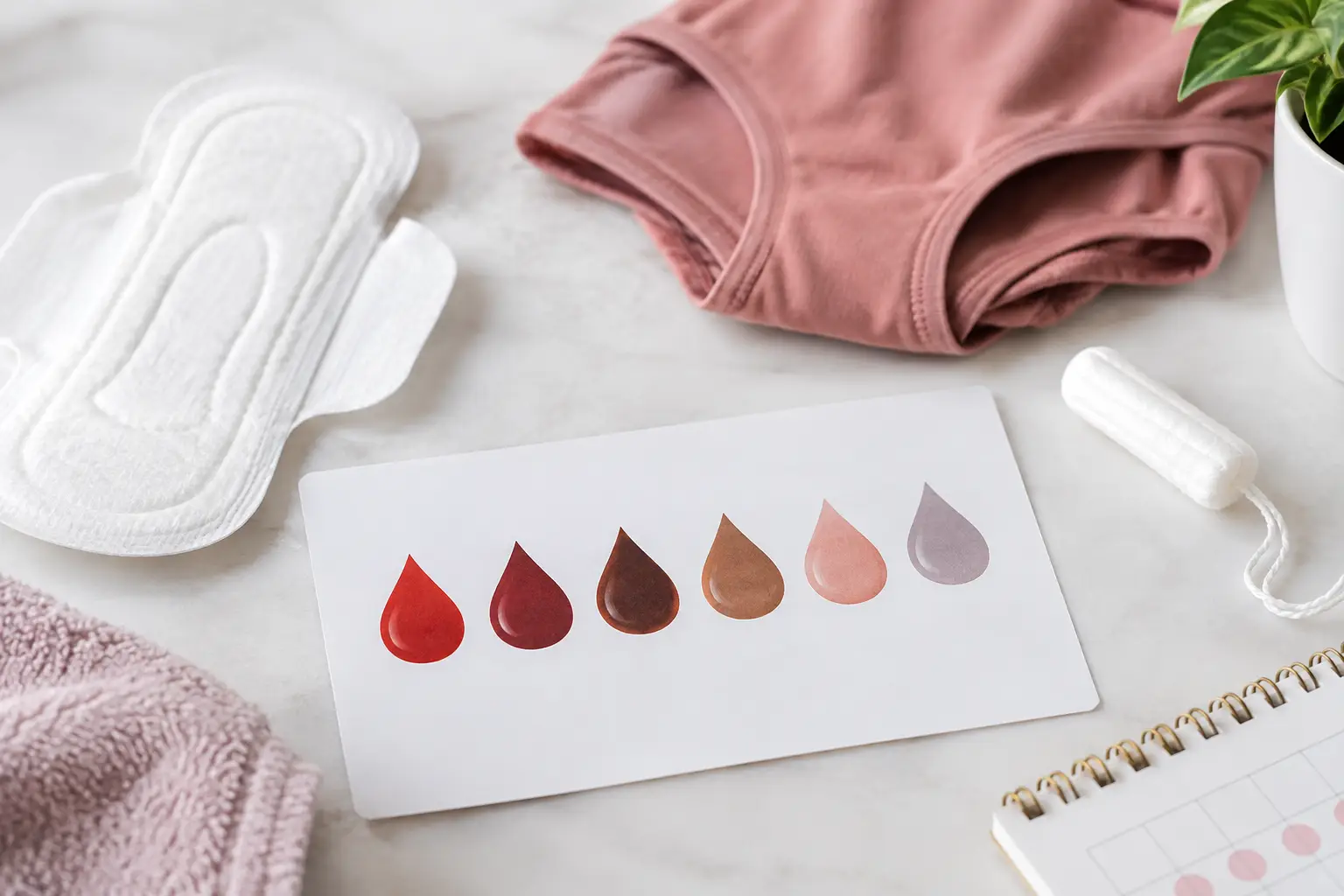
A period is not meant to look identical from the first day to the last. Menstrual blood colours can shift with flow, time and the mix of blood with cervical fluid. Noticing that change is not fussing. It is ordinary body literacy, and it can give you clearer language if something feels different enough to discuss with a clinician.
Colour alone cannot tell you what is happening medically. The more useful picture includes timing, amount, pain, smell, pregnancy possibility and whether this is a real change from what is usual for you. A single unusual-looking wipe may mean very little. A pattern that persists, or arrives with concerning symptoms, deserves attention.
Menstrual blood colours: the short answer
Fresh blood is usually bright or dark red. Blood that has taken longer to leave the uterus often looks dark brown or nearly black because it has oxidised, much like a cut apple changes colour in air. Pink bleeding can occur when a small amount of blood mixes with vaginal discharge. Orange-toned blood may also be a mixture of blood and discharge, although it can sometimes occur alongside infection symptoms.
Green, grey or markedly discoloured discharge or bleeding is not a typical period colour and needs prompt medical advice, particularly if there is any chance of pregnancy. The same is true of heavy bleeding, severe pain or feeling unwell, whatever the colour of the blood.
What different period blood colours may reflect
Bright red blood
Bright red blood usually means the bleeding is fresh and moving out of the uterus relatively quickly. It is common on heavier-flow days and often appears at the start or middle of a period. Small clots can also be normal, particularly when flow is heavier.
What matters is the amount as well as the shade. The NHS advises seeking urgent medical help for very heavy vaginal bleeding, especially if you are soaking through pads or tampons very quickly, feeling faint, short of breath, or have severe pain. If you think you may be pregnant, bleeding should be assessed rather than assumed to be a period.
Dark red, brown or black blood
Dark red, brown and almost black blood are commonly older blood. It may appear as spotting at the beginning of a period, at the end when flow is lighter, or after blood has collected in the vagina before leaving the body.
This is often unremarkable when it matches your usual pattern and there are no other symptoms. But a new pattern of bleeding between periods, after sex, or after the menopause is worth raising with a GP or gynaecology service. The NHS recommends assessment for unusual bleeding, rather than relying on colour to explain it away.
Pink blood
Pink bleeding or spotting can happen when a small amount of blood mixes with cervical fluid. It may be seen around the beginning or end of a period. Some people also notice light spotting around ovulation, though not everyone does.
Pink bleeding is not specific to one cause. If it is unusual for you, recurrent, follows sex, or happens when pregnancy is possible, record the date and context and speak to a clinician. If you have a positive pregnancy test and any bleeding, seek medical advice promptly, especially if there is one-sided abdominal pain, shoulder-tip pain, dizziness or fainting.
Orange blood or discharge
Orange can simply result from blood mixing with vaginal discharge. It can also look orange if a small amount of blood is mixed with discharge from an infection. Colour is not enough to distinguish between these possibilities.
Pay attention to accompanying changes: a strong or unpleasant smell, itching, soreness, pain when passing urine, pelvic pain, or discharge that is unusually thick or frothy. These are useful details for a clinician. Do not self-treat based on colour alone, particularly if symptoms are new or you may be pregnant.
Green or yellow-green discharge
Green or yellow-green discharge is not a period colour, and it is one of the colours most worth acting on rather than watching. It is more often associated with an infection, and testing is the only reliable way to find out which one, rather than guessing from the shade alone. It is frequently frothy, may come with a strong or unpleasant smell, itching or soreness, and can appear alongside or instead of bleeding.
This is not a colour to self-treat with whatever is on a pharmacy shelf. Arrange to see a GP or sexual health clinic promptly, particularly if it is new, if you have pelvic pain, or if a partner has symptoms too.
Grey discharge or bleeding
Grey or greyish discharge is not generally considered a typical menstrual variation. It may occur with an infection, and in pregnancy it can be associated with pregnancy tissue. Contact a clinician promptly for advice, and seek immediate medical care if it occurs with heavy bleeding, severe abdominal pain, fever, dizziness, fainting or feeling acutely unwell.
There is no prize for waiting this out quietly. Seeking care is proportionate, not dramatic.
The details that make colour more useful
A colour description becomes more meaningful when it sits beside a few specific observations. You do not need to record every toilet visit. A practical floor is to note the first day of bleeding, when it becomes heaviest, when it ends, and anything clearly different from your usual period.
If you have the capacity for more detail, note whether bleeding is spotting or requires menstrual products, whether clots are new or larger than usual, where pain is felt, and whether there is fever, unusual discharge or a possible pregnancy. The date matters. "Brown spotting for two days before my period" tells a clinician much more than "my period was strange".
A record like this exists to speak for you when memory alone would not be enough. If you use Feminal, recording cycle changes and symptoms can make that dated account available to your linked clinician between appointments. Missing a day does not make the record useless. A partial record is still your evidence, not a test you can fail.
When colour is less important than urgency
Some symptoms need action regardless of whether the blood is red, brown or pink. Seek immediate medical care if you have heavy bleeding with fainting, severe or worsening pelvic or abdominal pain, shoulder-tip pain, fever, confusion, or signs that you are seriously unwell. These symptoms are especially urgent if pregnancy is possible or confirmed.
Arrange a routine appointment for bleeding between periods, bleeding after sex, a substantial change in your cycle pattern, bleeding after the menopause, or periods that are becoming much heavier or more painful. NICE guidance on heavy menstrual bleeding recognises that the impact on daily life matters too. You do not have to wait until bleeding becomes an emergency before asking for help.
If you are using hormonal contraception, have recently changed contraception, are approaching menopause, have had a baby, or are undergoing fertility treatment, bleeding patterns can alter for several reasons. Your own clinician can interpret colour and timing alongside your medicines, history and current care plan.
Avoid the attention that does not help
There is a difference between observing your body and being pulled into endless uncertainty. Comparing photos of period blood online, searching every shade late at night, or treating one unusual wipe as proof of a serious problem rarely gives reliable answers. Menstrual blood changes in appearance with lighting, absorbent products and time in the air.
Aim your attention at what can be acted on: a dated pattern, associated symptoms and a clear threshold for seeking care. NHS, NICE and RCOG guidance consistently places the emphasis on symptoms, bleeding pattern and clinical context, not a colour chart used in isolation.
Your period does not need to be aesthetically tidy or perfectly predictable to be normal. But when something is different, you are allowed to notice it, name it plainly and ask for it to be taken seriously.
Sources used
NHS guidance on vaginal discharge, periods and when to seek medical advice. NICE guideline NG88 on heavy menstrual bleeding. RCOG patient information on abnormal bleeding.